Why Every Beginner Needs a Mount Escape
Getting pinned under a heavier partner is one of the first real challenges new students face. Learning how to escape mount in BJJ turns that moment from panic into a clear plan, whether you train in Stoneham or nearby in Woburn, Reading, or Melrose.
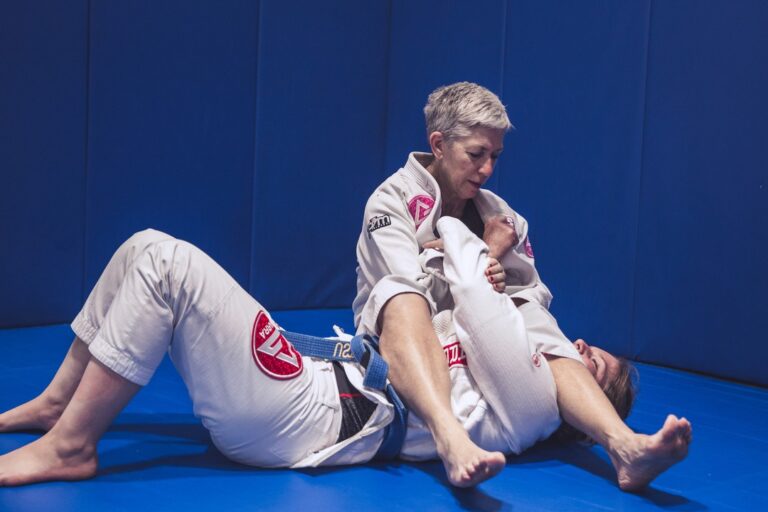
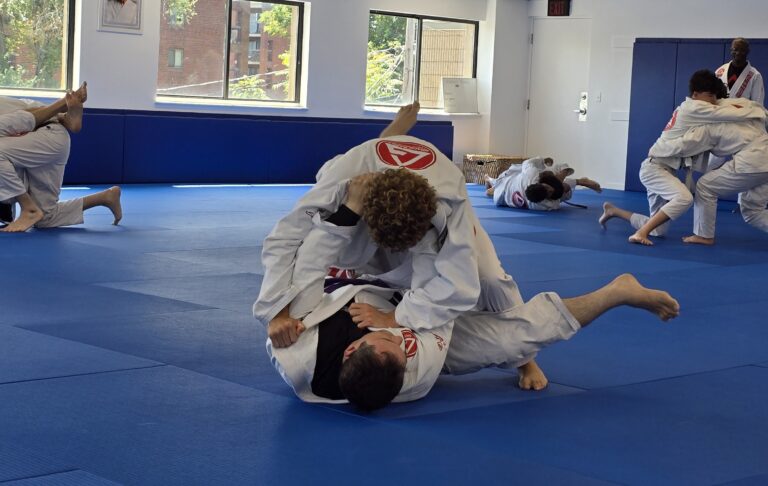
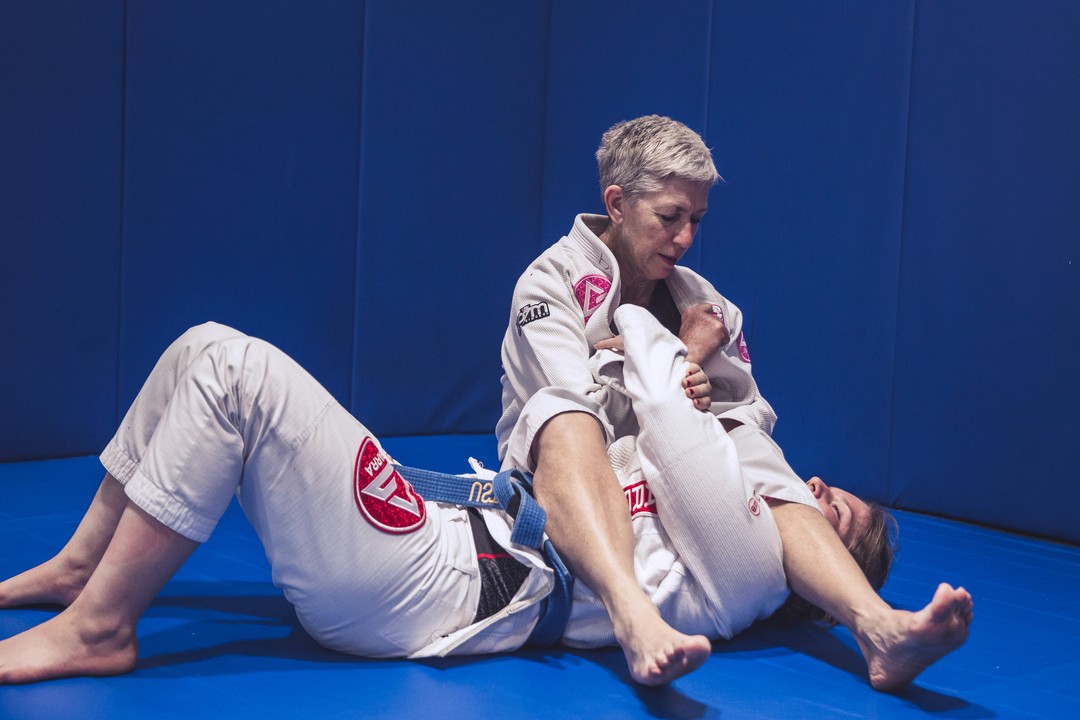
In the mount, your opponent sits on your torso with their knees on the mat. At Gracie Barra Stoneham, every student follows a clear curriculum through our jiu-jitsu programs for all ages, starting with the fundamentals that keep you safe.
DISCOVER Gracie Barra Stoneham
CLICK HEREHow to Escape Mount in BJJ: Core Principles
Before learning any specific technique, you need the right defensive habits. These four principles apply to every mount escape and keep you safe while you wait for an opening to move.
Protect Your Neck First
When someone mounts you, chokes and arm attacks become their main threats. Keep your chin tucked and your hands close to your collar so their grips have nowhere easy to land.
Most instructors teach this habit early because it prevents the fastest finishes. If you are still preparing for your first jiu-jitsu class, expect defensive posture to come up often.
Keep Your Elbows Tight
Elbows that drift away from your ribs create space for your opponent to slide their knees higher. That position, often called high mount, makes escaping much harder and opens the door to armbars.
Think of your elbows as walls protecting your sides. With them tight, you block their knees from climbing and keep the mount low, which is exactly where your escapes work best.
Stay Calm and Control Your Breathing
Bottom mount feels heavy, and new students often waste energy in wild bursts. Slow, steady breathing keeps your mind clear and saves strength for the moment you actually need to explode.
Composure grows with repetition, not with perfect conditioning. Many people worry about fitness at the start, but being in shape for BJJ is not a requirement for learning to relax under pressure.
Move Your Hips, Not Just Your Arms
Your arms are weak compared to a full body weight pressing down on you. Your hips, on the other hand, can lift and shift that weight when you bridge or shrimp with good timing.
Every effective escape starts with hip movement while your arms frame and guide. Once you understand that relationship, the techniques below make far more sense.
The Two Fundamental Mount Escapes
Most beginner mount escapes come from two movements: the bridge and roll and the elbow-knee escape. Learning both gives you an answer no matter how your partner reacts.
The Bridge and Roll (Upa)
The upa uses a strong bridge to roll your opponent over to one side. Trap one of their arms against your chest, then trap the foot on that same side with your own foot.
Drive your hips up and turn over your shoulder toward the trapped side, landing inside their guard. For anyone asking how to escape mount in BJJ, this is the first technique to sharpen with a consistent weekly training routine.
Why Trapping One Side Matters
Without a trapped arm and leg, your partner simply posts a hand or foot on the mat and stops the roll. The trap removes their base on that side, so your bridge has somewhere to send them.
Secure the arm by gripping around the elbow or sleeve and holding it close. Then place your foot on the outside of their foot so it cannot slide out to catch their weight.
The Elbow-Knee Escape
When your partner keeps a wide base, the elbow-knee escape is often the better choice. Turn slightly onto your side, place your elbow against their knee, and shrimp your hips away to create space.
Slide your knee through that space to recover half guard, then work back to full guard. Shrimping with a partner demands control, so following proper mat etiquette and safety keeps every repetition productive.
Common Mistakes When Escaping Mount
Knowing what not to do saves you from frustration and quick submissions. These three errors show up often among newer students, and each one has a simple fix.
Pushing Straight Up on the Chest
Extending both arms to push your partner away is a natural reaction. Unfortunately, straight arms are easy to isolate, and an alert opponent can turn that push into an armbar in seconds.
Keep your arms bent and use them as frames instead of levers. Let your hips do the heavy work while your hands guide the space you create.
Bridging Without a Plan
A bridge with no trapped side usually lifts your partner and drops them right back in place. You spend energy and gain nothing, which leaves you more tired for the next attempt.
Connect every bridge to a goal, either rolling toward the trapped side or creating space for the elbow-knee escape. Combining both movements is what makes your defense hard to shut down.
Turning Your Back
When the pressure feels heavy, some beginners roll onto their stomach to get away. This gives up the back, which is an even more dangerous position than being mounted.
Turn onto your side only as far as needed to shrimp, keeping your chest facing your partner. That way you stay protected while your hips build the space to recover guard.
How to Drill Mount Escapes Effectively
Knowing how to escape mount in BJJ is only half the work, because repetition makes it reliable. Start slowly with a cooperative partner, then ask for light resistance as each movement starts to feel natural.
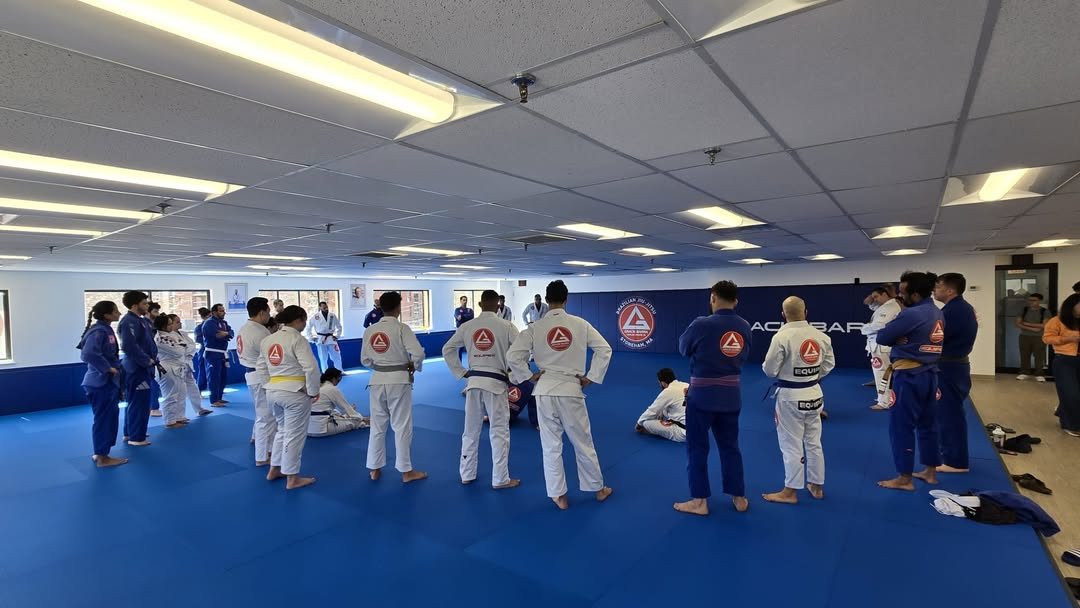
At Gracie Barra Stoneham, Professor Alessandro De Morais has been training jiu-jitsu since 2008 and guides students through every detail. Check the weekly class schedule to find a session that fits your routine.

Putting Your Mount Escapes Together
The strongest defense links protection, calm breathing, and hip movement into one system. If the upa gets blocked, switch to the elbow-knee escape, and if that stalls, look for the roll again.
Staying composed under weight is a skill that carries well beyond the mats. For younger students, that same calm under pressure connects directly to overcoming fear and social anxiety through steady practice.
DISCOVER Gracie Barra Stoneham
CLICK HEREStart Building Your Escapes in Stoneham
Learning how to escape mount in BJJ gives you a clear plan for one of the most stressful positions in grappling. Protect your neck, keep your elbows tight, and let your hips lead every escape.
If you live in Stoneham or a nearby town and want to learn these fundamentals in a welcoming setting, Gracie Barra Stoneham is ready to help you take your first step onto the mat.